I am currently a Ph.D. candidate at the Pattern Recognition Lab, Friedrich-Alexander-Universität Erlangen-Nürnberg (FAU), supervised by Prof. Andreas Maier. Previously, I received my M.Sc. degree from FAU and my B.Eng. degree from Nanjing University of Science and Technology. My research focuses on the intersection of inverse problems and deep learning, particularly in medical imaging reconstruction and artifact compensation. I develop differentiable CT operators and GPU-accelerated pipelines for physics-informed training and test-time optimization. My passion lies in improving the practicality of deep learning algorithms in healthcare, with a primary focus on CT reconstruction, medical foundation models, and generative models for image restoration.
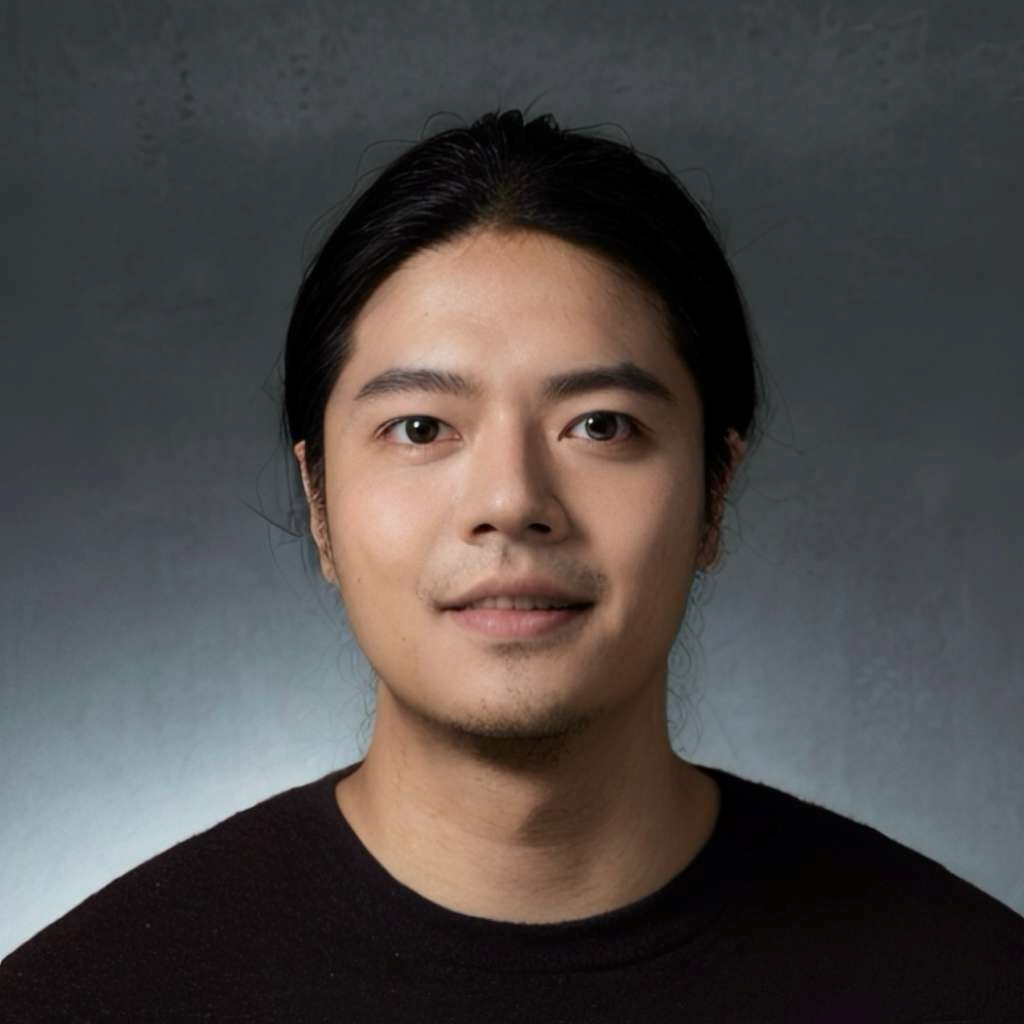
I develop methods that are not only accurate but also interpretable and physically grounded, bridging the gap between deep learning and domain knowledge in medical imaging.
Differentiable CT operators and end-to-end pipelines for physics-informed training. Trainable filters for filtered back-projection and GPU-accelerated reconstruction.
Self-supervised and single-image denoising for low-dose CT under extreme data constraints, combining attention mechanisms with classical signal processing.
Generative model-based motion artifact compensation in cone-beam CT (CBCT). Test-time optimization with physics-constrained priors.
Building CUDA-accelerated, differentiable forward/back projection operators that enable end-to-end optimization of reconstruction pipelines.
Full list on Google Scholar.
Physics in Medicine & Biology, 2025
Physics in Medicine & Biology, 70(24), 245015, 2025
Journal of Medical Imaging, 12(5), 054004, 2025
Fully Three-Dimensional Image Reconstruction (Fully3D), 2025
14th Conference on Industrial Computed Tomography (iCT), 2025
Reconstruction and Imaging Motion Estimation, and Graphs in Biomedical Image Analysis (RIME, MICCAI Workshop), 2025
Fully Three-Dimensional Image Reconstruction (Fully3D), 2025
International Conference on Image Formation in X-Ray CT (CT Meeting), 2024
Bildverarbeitung für die Medizin (BVM) Workshop, pp. 141–146, 2023
Edge-aware gradient localization enhanced loss for CT image reconstruction. Published in Journal of Medical Imaging.
Multi-agent tool that finds, verifies, and inserts real academic citations and BibTeX entries for LaTeX workflows.
Self-supervised single-image denoising for low-dose CT with interpretable attention-guided bilateral filtering.
CUDA-accelerated differentiable CT operator library using Numba. GPU-parallel forward/back projection for deep learning reconstruction.
A PyTorch perceptual loss implementation based on the modern ConvNeXt architecture.
Multi-agent AI system that challenges clinical diagnoses to prevent cognitive bias errors.
Pattern Recognition Lab, FAU Erlangen-Nürnberg
Advisor: Prof. Andreas Maier. CT/CBCT reconstruction, denoising, and motion artifact compensation. Leading AI software architecture for the BMBF-funded KI4D4E project (4D tomography), coordinating across 14 international partners.
Fraunhofer EZRT, Fürth
Deep learning for artifact compensation in industrial and scientific tomography. Robust training and inference pipelines for high-throughput CT systems.
Anki Lab, FAU Erlangen-Nürnberg
Neural architecture search for edge deployment. Genetic algorithm-based NAS and hardware-aware model design for Google Edge TPUs.
Friedrich-Alexander-Universität Erlangen-Nürnberg (FAU)
Focus: AI in Medical Imaging · Supervisor: Prof. Andreas Maier
Friedrich-Alexander-Universität Erlangen-Nürnberg (FAU)
Nanjing University of Science and Technology (NJUST)
Honor Graduate
Pattern Recognition Lab
Friedrich-Alexander-Universität
Erlangen-Nürnberg
Martensstraße 3, 91058 Erlangen, Germany